
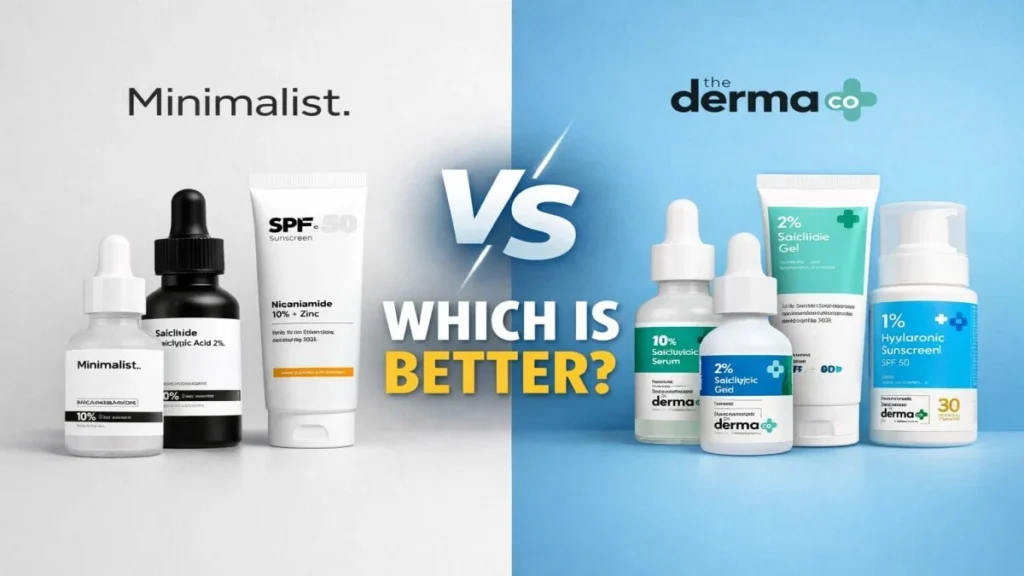
Minimalist Or Derma Co: Which Is Better? Learn 9 Powerful Pros & Cons, ingredients comparison, skin type guide and value for money information.
Have you ever been confused while buying skincare products — should you buy Minimalist or Derma Co? When you look at the packaging, one seems best, when you read the reviews, the other seems better… and finally, even after adding it to the cart, you still have doubts.
Today, we are going to understand in a very calm, practical way and through an unbiased comparison — Minimalist Or Derma Co: Which Is Better? The purpose of this article is to help you make the right decision according to your skin type, active ingredients and budget.
If you want detailed information about Indian skincare brands, then be sure to read our Top 10 Skin Care Brands in India guide.
Table of Contents
About the Brands
Minimalist
Minimalist is known as an ingredient-focused skincare brand. The biggest strength of this brand is formulation transparency — the percentage of active ingredients is clearly written on the packaging. For example, details like Niacinamide 10%, Salicylic Acid 2%, Retinol 0.3% are directly visible. Therefore, this approach is useful for those who want to create a skincare routine scientifically.
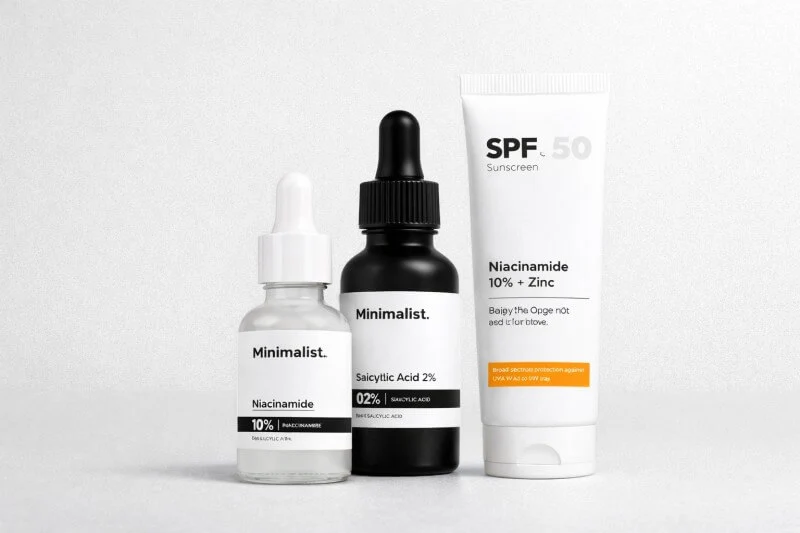
If you are used to reading ingredient lists, understand concepts like skin barrier, exfoliation, hydration, then you feel in control when choosing Minimalist products. Since they are fragrance-free and minimal formulation, this option is also considered for those looking for sensitive skin products.
Popular range includes niacinamide serum, salicylic acid serum, retinol, vitamin C serum — which are used for acne control, pigmentation, dull skin and uneven texture.
Official information is available on their official website.
The Derma Co
The Derma Co is a dermatologist-inspired skincare brand. The brand’s strategy is a little different — they focus on skin concerns rather than ingredients. That is, clear category labeling like “Acne Control”, “Pigmentation Correction”, “Oil-Free Moisturizer”, “Sensitive Skin Sunscreen” makes selection easy.
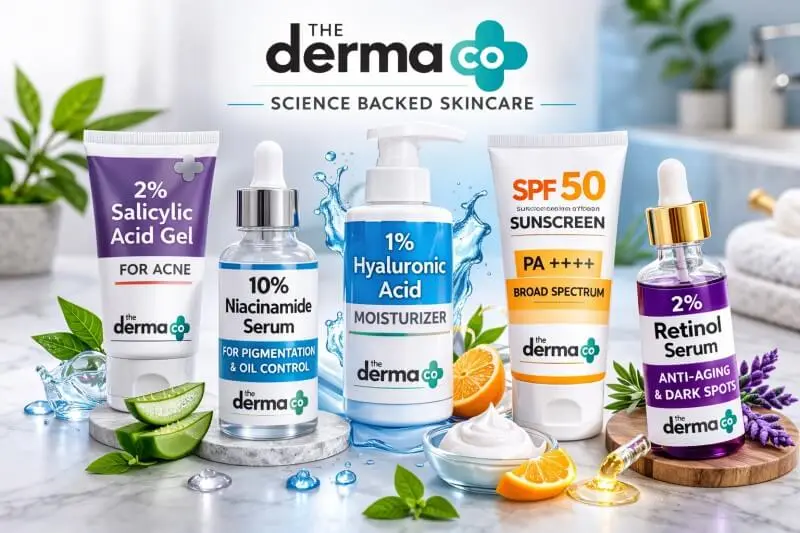
If you are a skincare beginner and don’t know much about active ingredients, then the concern-based range gives you confidence. There are different targeted products available for acne-prone skin, oily skin, combination skin.
Their portfolio has many trending active ingredients like niacinamide, salicylic acid, hyaluronic acid, vitamin C, sunscreen SPF range, but the presentation is more guided.
9 Powerful Pros & Cons
PRO 1: Ingredient Transparency (Minimalist Strong Point)
Have you ever read the ingredient list on the back of a skincare product? And let’s be honest — do you really understand what’s in those small letters? Most of the time, no. This is where Minimalist stands out.
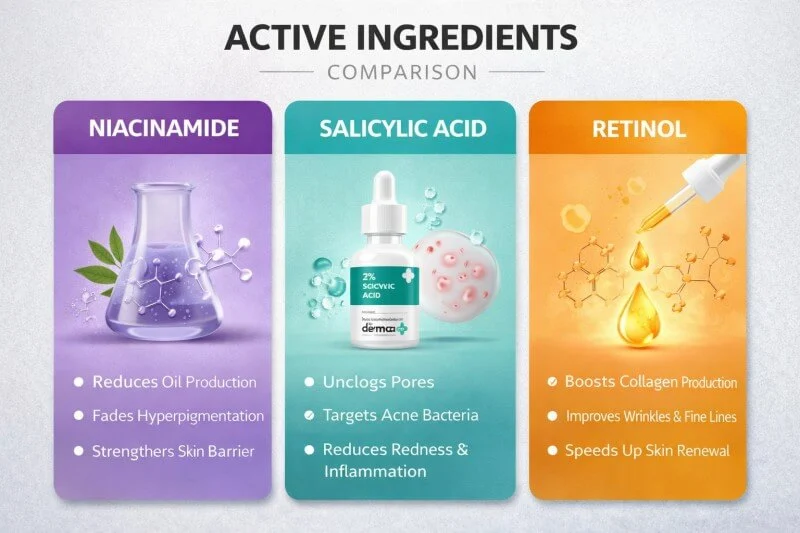
Minimalist packaging gives you a clear and concise look at the exact percentage of active ingredients — Niacinamide 10%, Salicylic Acid 2%, Retinol 0.3%. That means you don’t have to guess. You know exactly how potent what you’re using is. Whether you want to build a scientifically-based skincare routine, protect your skin barrier, or systematically treat acne — this transparency gives you a lot of confidence.
For example, if you have oily or acne-prone skin and are considering using a salicylic acid serum, a 2% concentration is considered safe and effective. Minimalist is clear about this, which helps prevent over-exfoliation or irritation. Similarly, when using a niacinamide serum, whether to use 5% or 10% — you can make this decision in an informed manner.
I think it’s very important to have less guesswork in skincare. Because ultimately, your skin is not a place to experiment. Ingredient transparency means you don’t have to blindly trust a brand — you can make an informed choice. And in today’s era, where marketing claims are so numerous, such clarity is a real strength.
CON 1: Can be a bit confusing for beginners
Now, as we talked about ingredient transparency, we need to be honest about it. Because not every strong point is perfect for everyone.
Suppose you have just started your skincare journey. All you know is that you have acne, oily skin, or dark spots. In such a case, seeing technical terms and percentages like Niacinamide 10%, AHA 8%, Retinol 0.3%, Salicylic Acid 2% on the packaging can feel a bit overwhelming. “How much should I use?”, “When should I use it?”, “Can I use it together?” — such questions naturally come to mind.
Active ingredients in skincare are powerful. If used in the wrong combination, they can cause skin irritation, dryness, redness, or skin barrier damage. For example, if you use retinol and AHA in the same routine, sensitive skin can be affected. For beginners, this information is essential to understand first.
That’s why some people find concern-based skincare (like “Acne Control Serum” or “Pigmentation Cream”) easier. Because there’s less decision-making involved. With Minimalist, you have to do a little research, read the ingredient list, and do a patch test is essential.
This doesn’t mean Minimalist is wrong. But if you’re a complete novice and haven’t explored skincare science yet, you might need some guidance in the beginning. Transparency is an advantage if you have the right information, but that same factor can create confusion if you don’t have the information.
PRO 2: Concern-Based Skincare Approach (Derma Co Strong Point)
Now let’s think a little more practically. Not everyone wants to understand ingredient percentage. Some people only know this — “I have acne”, “My skin is oily”, “I want to reduce pigmentation.” And to be honest, there is nothing wrong with this.
Here The Derma Co’s concern-based approach seems very helpful. It is clearly written on their product packaging — Acne Control Serum, Pigmentation Correction Cream, Oil-Free Moisturizer, Sunscreen for Oily Skin. This makes the selection process easy. You don’t need to delve into ingredient chemistry.
If you are a skincare beginner, then this approach gives confidence. For example, if you have acne-prone skin, a salicylic acid based serum is directly given as acne control. You don’t have to think much about how much 1%, 2% to take. The brand simplifies the solution for you.
This makes it mentally easier to build a skincare routine. Because decision fatigue is reduced. Guided skincare is especially practical for those who don’t fully understand terms like active ingredients, exfoliation, skin barrier repair.
Yes, the product does contain active ingredients like niacinamide, salicylic acid, hyaluronic acid. But the presentation is beginner-friendly. And many times, clarity and simplicity are more important at the beginning of the skincare journey.
So if you want a straight approach like “What is my problem and what is the direct solution for it?”, then Derma Co’s concern-based model may be comfortable for you.
CON 2: Marketing Claims Can Raise Expectations
Now let’s be honest. Marketing is very strong in the skincare industry — and Derma Co is no exception. When we see words like “Acne in 7 Days”, “Visible Results”, “Dermatologist Recommended”, we naturally think that we will get results quickly.
But here it is very important to remember one thing — skincare is not an overnight miracle. Active ingredients like niacinamide, salicylic acid, retinol work, but they take time. The skin cycle is about 28–45 days. Therefore, expecting dramatic transformation in 7 days is not practical.
Sometimes, expectations are too high due to aggressive marketing. People get disappointed if they don’t see visible changes immediately after starting using the product. Then they start thinking that the brand is not good. But in reality, the issue is not with the product but with unrealistic expectations.
Another thing is that concern-based labeling makes people think that “this product will completely solve my problem.” But acne, pigmentation, oily skin also depend on factors like lifestyle, diet, hormones, stress. Applying just one serum won’t change everything.
This doesn’t mean that Derma Co is wrong at all. But it’s important to be realistic about what you expect from a product. Keeping a consistent skincare routine, using sunscreen, doing a patch test — these basic things are equally important.
That’s why it’s natural to get excited when you see marketing claims, but it’s safer and more practical to think a little calmly before making a decision.
PRO 3: Affordable Pricing & Value for Money (Both Brands)
Now let’s look at a practical point — price. Because after all, no matter how scientific a skincare routine is, if it doesn’t fit into the budget, there will be no consistency. This is where both Minimalist and The Derma Co offer a strong advantage.
Serums from both brands are available in the range of ₹399 to ₹699. That is, this is not premium luxury skincare, but it is not completely cheap and low-quality either. Among Indian skincare brands, these fit into the value for money category. Especially, getting trending active ingredients like niacinamide serum, salicylic acid serum, vitamin C serum at an affordable rate is a good thing.
If you are a beginner and are building a skincare routine, then creating a basic routine of cleanser + serum + moisturizer + sunscreen keeps the cost manageable. And consistency is the most important thing in skincare. Using an affordable product regularly is more effective than buying an expensive product and using it for two months.
If you are still confused about moisturizer, you can check out our Cetaphil vs Minimalist moisturizer comparison article.
Online platforms often offer discounts, combo offers and sale deals. Therefore, these brands seem practical for those looking for budget skincare. Both brands claim to have formulated their products keeping in mind the Indian climate and Indian skin concerns, so the price-to-performance ratio seems balanced.
Yes, results may vary depending on skin type. But given the price range, experimenting doesn’t seem financially risky. And trial and error is part of skincare.
In short — if you want to create a skincare routine with active ingredients on a budget, then Minimalist and Derma Co can both be value for money options.
CON 3: Results Completely Depend on Skin Type
Now let’s understand a very important thing here calmly. No matter how many reviews you read, compare, check active ingredients — ultimately, skincare results completely depend on your skin type.
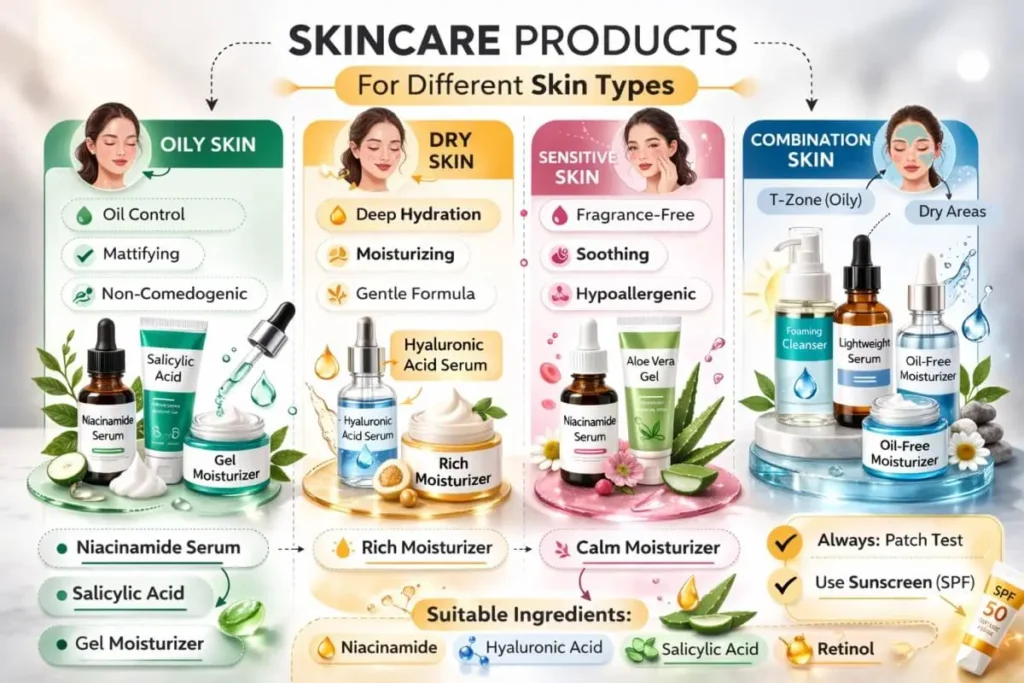
Have you ever noticed? A product suits your friend very well, but the same product gives you irritation. Because skin type, skin barrier strength, lifestyle, climate — all these factors are different.
For example, salicylic acid serum can be effective for acne-prone and oily skin. But if your skin is already dry or sensitive, it can increase dryness. Similarly, retinol, although good for anti-aging and pigmentation, can cause redness or peeling in the beginning for beginners.
Be it Minimalist or Derma Co — both brands use active ingredients. But just because an active ingredient is powerful does not mean that it will give the same results to everyone. Skincare is a personalized journey. Therefore, it is very important to do patch tests, introduce the product gradually, and observe the skin reaction.
Sometimes people keep changing products because they don’t see results in 2-3 weeks. But the truth is that skin takes time to adapt. Consistency, sunscreen use and a balanced routine are equally important.
So while choosing a brand, the question “Is this right for my skin type?” is more important than “Is this the best?” Because in the end, your skin response is more decisive than any skincare comparison.
PRO 4: Wide Product Range & Complete Skincare Options (Derma Co Advantage)
Now think about a practical thing — if you are building a full skincare routine, you need not only serum, but also cleanser, moisturizer, sunscreen, sometimes hair care or body care products. Here we see a strong advantage of The Derma Co — wide product range.
Derma Co does not stop at serums alone. Products are available in many categories like Acne control face wash, oil-free moisturizer, sunscreen SPF range, pigmentation cream, even hair growth serum. This means you do not need to jump between different brands. You can get a complete routine in one brand.
This seems easy for a skincare beginner. Because after using products from a single brand, you feel a little confident about compatibility. Due to the concern-based approach, ready-made solutions like “Acne Kit” or “Pigmentation Combo” are also available. Decision-making becomes mentally easy.
At the same time, keeping in mind the Indian climate — humidity, pollution, sun exposure — there is a special focus on sunscreen and oil-control products. Oily skin, combination skin and acne-prone skin are common in India, so this range seems practical.
Yes, a wide range doesn’t necessarily mean better quality. But convenience is a big factor. If you want to build your skincare routine systematically and prefer a single brand ecosystem over mixing and matching products, then Derma Co’s advantage is worth considering.
In short — if you want variety and convenience, Derma Co gives you more options.
CON 4: Too Many Options = Decision Confusion
Now, a wide product range is an advantage, but sometimes it can also be a slight drawback. Because when there are too many options, it is difficult to make a decision — and this is very common in skincare.
Let’s say you go to Derma Co’s website. You see 4–5 different serums for acne alone — niacinamide based, salicylic acid based, AHA-BHA peel, spot correction gel… Now the question is, “Which one should I get?” I have oily skin, but I also have pigmentation — so should I get different ones for both? Should I use them together?
Too much variety can be confusing for beginners. If you use the wrong combination, you risk over-exfoliation, dryness, or skin irritation. Active ingredients are powerful, so it is important to have clarity when building a routine.
Sometimes the marketing labels seem similar — “acne repair”, “oil balance”, “pore minimize” — but the actual ingredient composition can be almost the same. Therefore, it is essential to read the ingredient list when selecting a product. And if you don’t, you may end up making the wrong choice.
Simplicity is sometimes more effective in skincare. Cleanser + targeted serum + moisturizer + sunscreen — a basic routine like this can be enough. But seeing too many options, people add unnecessary products, and the routine becomes complicated.
So while variety is an advantage, lack of clarity can create confusion. In the end, it’s not how many products there are that matters — what matters is that you choose the right one for your skin type.
PRO 5: Minimal Formulation & Fragrance-Free Approach (Minimalist Advantage)
Now if you have sensitive skin, you know one thing for sure — fewer ingredients sometimes mean more safety. And this is where Minimalist’s minimal formulation approach comes in.
Many Minimalist products avoid unnecessary fragrance, artificial color, or extra additives. The focus is only on the active ingredients and the supporting base formulation. This makes the chance of skin irritation relatively low — especially for those with sensitive skin or a compromised skin barrier.
For example, if you use a niacinamide serum, you are getting a simple formula that mainly contains niacinamide + basic hydrating agents. The lack of marketing heavy fragrance can make the product feel less “cosmetic feel” when using it, but skin comfort is more important.
Over-complication is a big issue in skincare. Many products have 15–20 ingredients, some of which are for marketing purposes. The minimal formulation approach makes the ingredient list feel relatively clean and focused. This is a strong point for those who are ingredient aware and want to protect their skin barrier.
Yes, a simple formulation can make a product seem boring. The packaging is also plain. But if your goal is long-term skin health and you want to avoid unnecessary irritation, then a minimal approach is practical.
In short — if you like the “less is more” philosophy and want a fragrance-free, focused skincare routine, then Minimalist’s minimal formulation approach may be comfortable for you. You can see detailed information about Minimalist Vitamin B5 Moisturizer benefits for hydration.
CON 5: Visible Results Can Sometimes Feel Slow
Now let’s be honest here — Minimalist’s minimal formulation approach seems safe, but some people may find its results a little slow.
When we use a skincare product, we have a small expectation in mind — “I should see a difference in a few days.” Especially if we have acne, pigmentation, or dull skin, we want visible change quickly. But since it’s a gentle formulation, the results can be gradual.
For example, niacinamide serum helps even out skin tone, controls oil, and helps reduce the appearance of pores. But this doesn’t happen overnight. You have to maintain consistency for about 4–6 weeks. When using retinol or exfoliating acids, there is also a skin adjustment phase.
Sometimes people assume that a product is ineffective because they don’t have patience. But the truth is, skincare science takes time. It takes 28–45 days for the skin renewal cycle to complete. So, expecting “instant glow” can be disappointing.
Since the minimal formulation may cause less irritation, but the dramatic transformation may also be less visible. If you want a quick cosmetic finish, a heavy fragrance, or a strong sensorial feel, a simple formula can feel a bit plain.
So this isn’t really a product fault — it’s part of expectation management. If you can accept long-term skin health, barrier protection, and gradual improvement, then slow results can be considered safe progress, not negative.
Consistency > speed in skincare — remembering this will reduce frustration.
PRO 6: Easy Online Availability & Accessibility
Now think about a practical thing — what if you decide to use Minimalist or Derma Co, but the product is not available? The good thing is that both brands are easily available online.
Products are easily available on official websites, Amazon, Flipkart and other e-commerce platforms. This means you don’t have to go to a specific city or a big mall. Delivery is also available in small cities in India — this is a huge convenience.
Skincare routine runs on consistency. If a product cannot be easily reordered, then the routine breaks. But it is easy to restock here. Regular discounts, combo offers, sale deals are also available. Maintaining a budget skincare becomes manageable.
You can read reviews, check the ingredient list, compare prices — and then make an informed decision. Online availability increases transparency. Customer feedback helps you set realistic expectations.
Yes, it is important to verify the seller while buying online. It is safer to choose an official store or a trusted seller to avoid the risk of fake products.
But overall — accessibility is a big advantage. You don’t have to struggle to find skincare products. And when the routine is easy to stick to, long-term results are also more consistent.
In short — both brands are practical and user-friendly in terms of availability and convenience.
CON 6: Fake Products & Online Purchase Risk
Now we have talked about availability, but there is another practical side to it. As easy as online availability is, there is also a small risk — fake or duplicate products.
Have you ever seen, the price seems very low on an e-commerce platform? A serum that costs ₹599 everywhere else is available for somewhere around ₹349. In such a case, it is necessary to be a little careful. Because skincare products contain active ingredients — such as niacinamide, salicylic acid, retinol. If the formulation is not genuine, then skin irritation, allergy or breakout can occur.
When using a fake product, people blame the brand, but the actual problem lies in the product purchased from a duplicate seller. Therefore, it is safer to buy from the official website, verified seller or trusted platform.
Another thing — checking the expiry date and packaging is very important. If there is a damaged seal or unusual smell, it is necessary to confirm before using the product. Safety first is the approach in skincare routine.
It’s also important to be practical when reading online reviews. Some reviews are genuine, some may be sponsored. So it’s important to make an informed decision.
This issue isn’t limited to Minimalist or Derma Co — it applies to almost all popular skincare brands. As popularity increases, so does the risk of duplicates.
So availability is an advantage, but smart buying is equally important. This risk can be easily avoided with a little care.
PRO 7: Trending Active Ingredients & Modern Formulation
Now one thing has to be admitted — the skincare industry is evolving very rapidly. A few years ago, words like niacinamide, retinol, AHA-BHA peel, hyaluronic acid were known to very few people. But today these ingredients have become a part of the skincare routine. And here both brands Minimalist and Derma Co are not far behind in using modern, trending active ingredients.
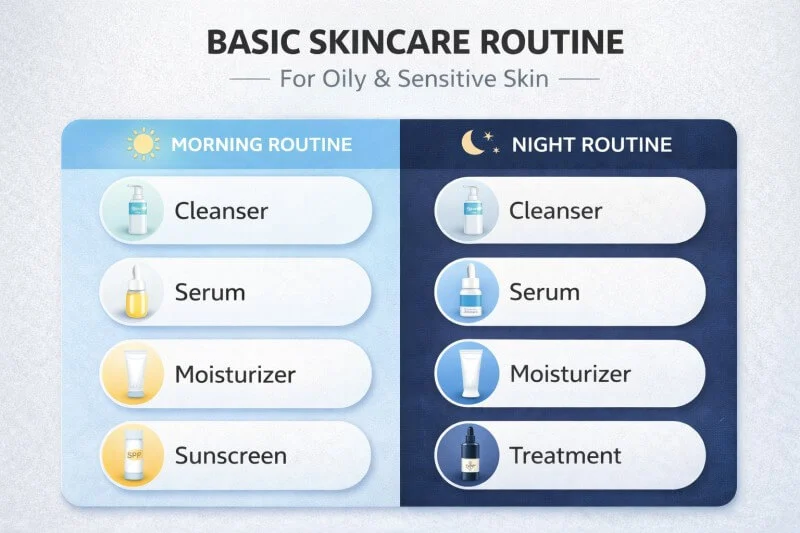
If you are looking at skincare content on social media, then you must have heard terms like “skin barrier repair”, “chemical exfoliation”, “anti-aging routine”, “oil control serum”. Following this trend, both brands offer scientifically popular ingredients at affordable prices.
For example, salicylic acid for acne-prone skin, vitamin C for pigmentation, retinol for anti-aging, hyaluronic acid for hydration — all these options are available. That means you don’t have to go to international brands. Similar active ingredients are available in Indian skincare brands.
What is the benefit of this? You can create an updated skincare routine. You can take a skin concern specific approach. For example, if you want to reduce the appearance of pores, you can add a niacinamide serum. If you have dull skin, you can consider gentle exfoliation.
Yes, active ingredients are powerful. Therefore, proper usage, patch testing and sunscreen use are essential. But having a modern formulation available is definitely a positive thing.
In short — if you want to follow the latest skincare trends and use scientifically popular ingredients, then both Minimalist and Derma Co brands remain relevant for you.
CON 7: Overuse of Active Ingredients Can Cause Skin Damage
Now that we’ve talked about trending active ingredients, here’s an important caveat. Niacinamide, salicylic acid, retinol, AHA-BHA peel — these ingredients are effective, but they’re also powerful. And powerful things can be harmful to the skin if used incorrectly.

Ever had this happen — you took salicylic acid because you had acne, took vitamin C because you wanted a glow, added retinol for anti-aging… and after a few days your skin became red, dry, or irritated? This can be due to over-exfoliation or overuse.
Whether it’s Minimalist or Derma Co — both brands offer active ingredients. But it’s important to understand how often to use, what concentration to start with, and which ingredients to avoid together. For example, using retinol and strong exfoliating acids on the same night can be harsh on sensitive skin.
When building a skincare routine, the rule of “more is better” doesn’t apply. On the contrary, it can damage the skin barrier. Dryness, peeling, breakouts can increase. Then people blame the product, but the issue lies in the routine design.
Therefore, patch testing, introducing the product gradually, and using sunscreen regularly are very important. Sun protection is mandatory, especially if you are using retinol or chemical exfoliation.
Active ingredients are an advantage, but if used without knowledge, they can become a disadvantage. Therefore, patience and an informed approach are the biggest tools in skincare.
PRO 8: Formulation that suits Indian Climate & Skin Concerns
Now let’s look at a practical point — our Indian climate. Heat, humidity, pollution, dust, strong sun exposure… all of these have a direct impact on our skin. Hence, it is important that skincare products also suit these conditions.
Minimalist and Derma Co, both being Indian skincare brands, seem to have Indian skin concerns in mind in their formulations. For example, oily skin and acne-prone skin are very common in India. Hence, products like oil-control serums, lightweight moisturizers, gel-based sunscreen are readily available.
Also, pigmentation and tanning are also common issues due to the Indian climate. Vitamin C serum, niacinamide serum, sunscreen SPF range — these products are developed keeping these concerns in mind. A lightweight texture seems more practical than a heavy, greasy formulation, especially in humid climates.
Brands claim that pigmentation treatment products are formulated keeping in mind Indian skin tone and melanin level. Hence, local brands sometimes seem more relatable than international brands.
Yes, every skin is different. But climate compatibility is a big factor. If the product texture is too heavy, it can feel uncomfortable in the Indian summer. Lightweight, non-comedogenic formulation is a practical necessity.
In short — using products that are formulated keeping in mind the Indian weather and common skin issues can logically be more suitable. And in this case, both brands seem relevant.
CON 8: Not being completely “natural” can be off-putting to some
Let’s be clear — both Minimalist and Derma Co are active ingredient–based. That means they use scientifically proven chemicals like niacinamide, salicylic acid, retinol, AHA-BHA, hyaluronic acid in their formulations.
If you’re looking for “100% natural”, “herbal only”, “chemical-free skincare”, these brands may not be exactly what you’re looking for.
The word “chemical” in skincare sounds negative, but in reality, every ingredient is a chemical — even water. Still, some people feel more comfortable with plant-based or ayurvedic skincare. Minimalist and Derma Co’s approach leans more toward scientific formulation.
For example, retinol or chemical exfoliants are clinically studied ingredients. They’re effective, but they don’t fit into the completely natural category. So, for people who want a herbal skincare routine, these brands may seem a little “clinical”.
Also, active ingredients can cause irritation if not used properly. Chemical exfoliants are more potent than natural oils or basic moisturizers.
So this negative point is not a brand fault but a matter of preference. If you want science-backed skincare, targeted treatment, and measurable ingredients, these brands are a good fit. But if your priority is completely natural skincare, you may need to explore another category.
Ultimately, the choice depends on your comfort level and skincare philosophy.
PRO 9: Strong Value for Money in the Long Run
Now let’s look at the last and very practical point — long-term value. Skincare is not a one-day game. The actual difference starts to be seen only after 3–6 months of consistent routine. Therefore, it is not enough for the product to be good, it is also important that it is financially sustainable.
Both brands Minimalist and Derma Co offer products with active ingredients in a comparatively affordable range. If you create a basic skincare routine like niacinamide serum, salicylic acid serum, sunscreen, moisturizer, it can still be manageable in the monthly budget.
Products with similar active ingredients in international brands are often very expensive. But here, long-term consistency is possible because scientifically popular formulations are available in Indian skincare brands. And consistency is the real power in skincare.
For example, if you want to reduce pigmentation, you have to use vitamin C serum + sunscreen for at least 2–3 months. If the product is too expensive, people leave the routine midway. But because it is affordable, it is easy to maintain the routine.
Also, considering the balance of price and ingredient quality, both brands seem practical. You can experiment, adjust your routine — and not feel the financial pressure.
Ultimately, the rule “most expensive = best” does not apply in skincare. A consistent, informed, and budget-friendly routine is more effective. And in terms of long-term value, both Minimalist and Derma Co can be considered strong options.
CON 9: Trial & Error May Be Necessary to Find the Perfect Product
Now for the last point — and this is actually a universal truth of skincare. Whether you’re a Minimalist or a Derma Co, you won’t find the “perfect product” on your first try.
Skincare is a very personal journey. Your skin type, hormones, diet, stress level, sleep pattern, climate — all of these factors affect the results. A niacinamide serum that suits your friend perfectly may dry you out. A sunscreen that feels lightweight may feel greasy to someone else.
So the trial & error part is inevitable. Sometimes you use a product for 3–4 weeks and then realize that it’s not ideal for you. In that case, don’t immediately decide that the brand is wrong. Maybe the formulation doesn’t match your skin barrier.
When introducing active ingredients, you need to give your skin time to adjust. Following these basic things — patch test, gradual usage, and proper sunscreen use — reduces the risk. But experimentation cannot be avoided completely.
Some people are more suited to Minimalist, some to Derma Co. And some people find it appropriate to mix different products from both brands and build a routine. This is all normal.
Ultimately, skincare is about patience + observation. Finding the perfect product is a process. And if you accept this process, frustration is reduced and decisions are more informed.
Conclusion: So Minimalist Or Derma Co – Which Is Better?
Now after seeing all this, you might be wondering — “Okay, but which one should I buy in the end?”
To be honest — both brands are good, but there is no single best for everyone.
If you are ingredient-aware, have a basic understanding of active ingredients like niacinamide, salicylic acid, retinol, and want to build a skincare routine scientifically — Minimalist may seem comfortable to you.
But if you are a beginner, have a specific concern like acne or pigmentation, and want a ready-made solution — Derma Co’s concern-based approach may seem more practical.
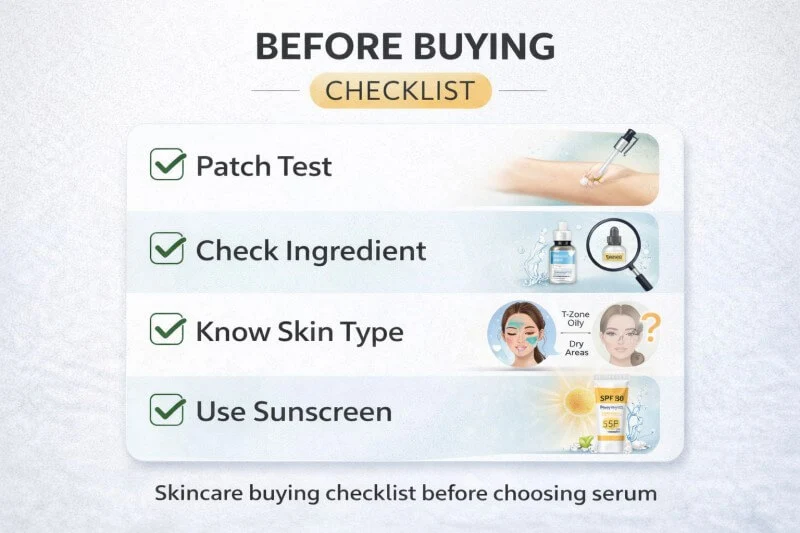
Remember one thing — skincare is not a race. Consistency, sunscreen use, proper routine, and patience are more important than the brand. “Is this brand viral” or “is this trending?” is more important than the question “Does this suit my skin type?”
Finally, make an informed decision. Do a patch test. Avoid overuse. And have realistic expectations.
Frequently Asked Questions About Minimalist Or Derma Co
1) Is Minimalist better than Derma Co?
Both brands are effective. The choice depends on your skin type, concerns, and ingredient knowledge.
2) Which brand is better for acne?
Both brands offer salicylic acid-based products for acne-prone skin. Derma Co’s concern-based approach may seem easier for beginners.
3) Is Minimalist safe for sensitive skin?
Minimalist’s fragrance-free and minimal formulation products are considered suitable for sensitive skin. However, a patch test is required.
4) Is Derma Co dermatologist approved?
The brand claims to have a dermatologist-inspired formulation. However, it is best to consult a dermatologist for individual skin conditions.
5) Is Minimalist an Indian brand?
Yes, Minimalist is an Indian skincare brand.
6) Which brand has better retinol?
Both brands offer retinol products. If you are a beginner, it is safe to start with a low concentration.
7) Which brand is better for daily use?
Cleanser + moisturizer + sunscreen are available in both brands for daily skincare routine. Consistency is more important.
Disclaimer
This article is for informational purposes only. The results of skincare products may vary from person to person. Before using any active ingredient (such as niacinamide, salicylic acid, retinol), perform a patch test and consult a qualified dermatologist if necessary. The information in this article should not be taken as medical advice.

Hi, I’m Abhijeet Bendale — founder of OfferDukan.com.
I am sharing informative lifestyle guides, smart buying tips, and honest product research across Beauty, Tech, Health, Travel, and more. My aim is to help readers find genuine offers, smart shopping tips, and useful product insights that make daily life easier and more affordable.
Thank you for supporting OfferDukan.com!